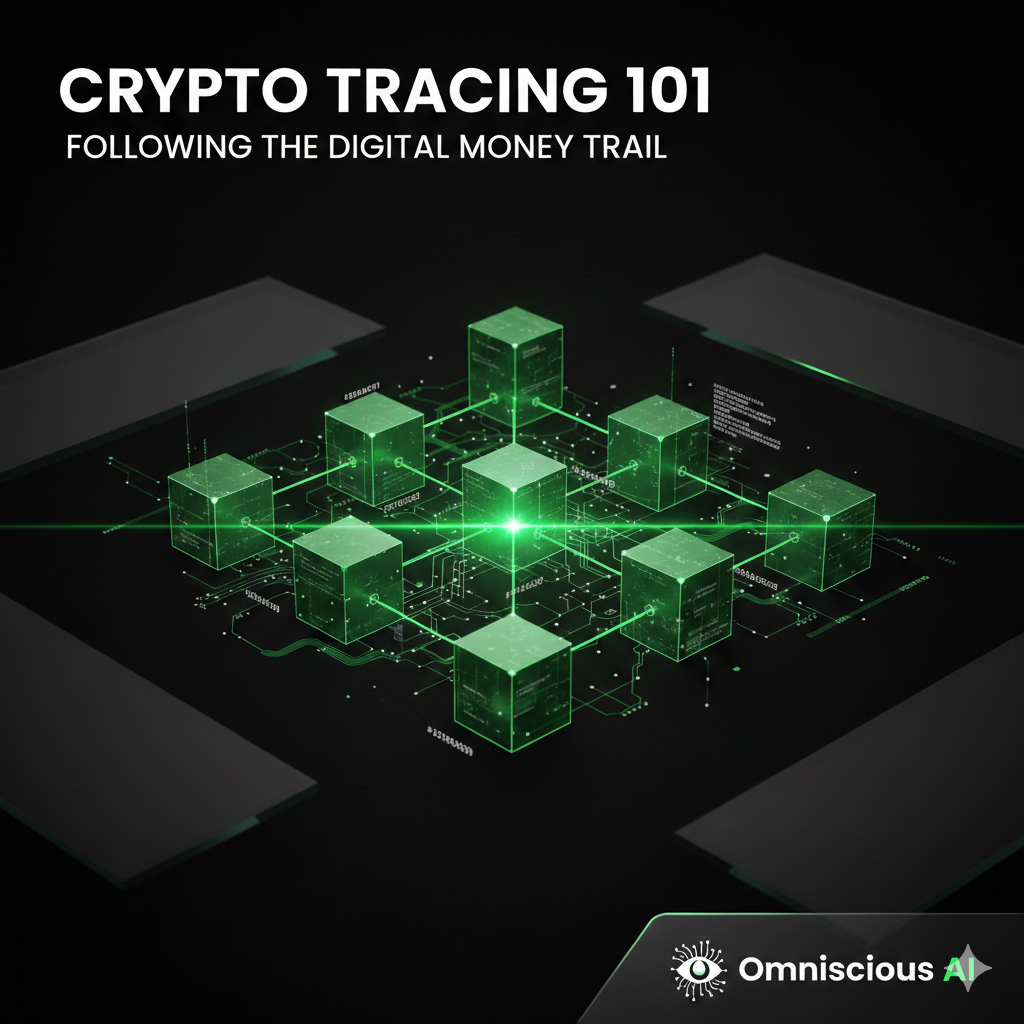
Crypto Tracing 101: Following the Digital Money Trail
Crypto Tracing 101: Following the Digital Money Trail
Introduction The myth of cryptocurrency anonymity has fueled billions in illicit activity. From ransomware payments to money laundering, bad actors believe the blockchain protects their identity. They are wrong. While Bitcoin and Ethereum are pseudonymous, they are not anonymous. With the right blockchain analysis tools, the ledger is an open book.
The Blockchain Ledger: A Permanent Record
Every transaction on a public blockchain is immutable. It is recorded forever. This is the investigator's greatest advantage. If you can link one transaction to a real-world identity, the entire history of that wallet unravels.
Key Concepts
- Public Key: The "account number" anyone can see.
- Private Key: The password used to sign transactions.
- On-Ramps/Off-Ramps: Exchanges where crypto is bought with or sold for fiat currency (USD, EUR).
De-Anonymization Techniques
How do we turn a string of alphanumeric characters into a suspect's name?
1. Clustering Analysis
Users often control multiple wallets. By analyzing transaction patterns (e.g., spending inputs from multiple addresses in a single transaction), algorithms can "cluster" these addresses together, attributing them to a single entity.
2. Dusting Attacks
Investigators (and hackers) send tiny amounts of crypto ("dust") to thousands of wallets. When the owner moves this dust, it gets mixed with their other funds, revealing the network of wallets they own.
Analyst Note: KYC (Know Your Customer) regulations at major exchanges are the chokepoint. Once traced funds hit a regulated exchange like Coinbase or Binance, a subpoena can reveal the account holder.
Strategic Implications for Financial Crime
Tracing is no longer manual. Automated platforms can monitor wallets in real-time. This capability is essential for:
- recovering stolen assets.
- preventing terrorist financing.
- auditing corporate crypto holdings.
Solutions and Tools
To trace assets effectively, you need more than just a block explorer. You need heuristic analysis and massive data sets of labeled addresses.
Actionable Checklist
- [ ] Monitor Critical Wallets: Set up alerts for large movements.
- [ ] Analyze Transaction Volume: Look for structuring (smurfing) to evade detection.
- [ ] Visualize the Flow: Use graph visualization tools to follow the money.
- [ ] Leverage AI: Omius AI integrates blockchain data with social signals to identify wallet owners.
Conclusion
The blockchain never forgets. For legitimate users, this transparency builds trust. For criminals, it is a permanent record of their crimes.
Need to trace assets or vet a transaction? Start your trial with Omius AI and gain access to advanced blockchain forensics.
Related Insights
Continue exploring digital intelligence and investigation techniques

Dark Web Monitoring: A Guide for Enterprise Security
What happens when your data leaves the surface web? Understand the dark web ecosystem and why continuous monitoring is essential for threat intelligence.

Social Engineering Defense: Beyond the Firewall
The weakest link in any security system is the human element. Learn how social engineers manipulate psychology and how to build a 'human firewall'.
Top 10 OSINT Tools Every Investigator Needs in 2026
The investigator's toolkit is evolving. From Maltego to new AI-driven scanners, discover the essential OSINT tools for modern intelligence gathering.